Sri Lanka’s Nomad Visa: Application, Paperwork & What the Diaspora Should Know
Sri Lanka’s new nomad visa explained: application steps, paperwork, internet realities, and what it means for the global diaspora after digital ID.
TRAVELEXPAT
Tiffany Garside
2/10/20263 min read
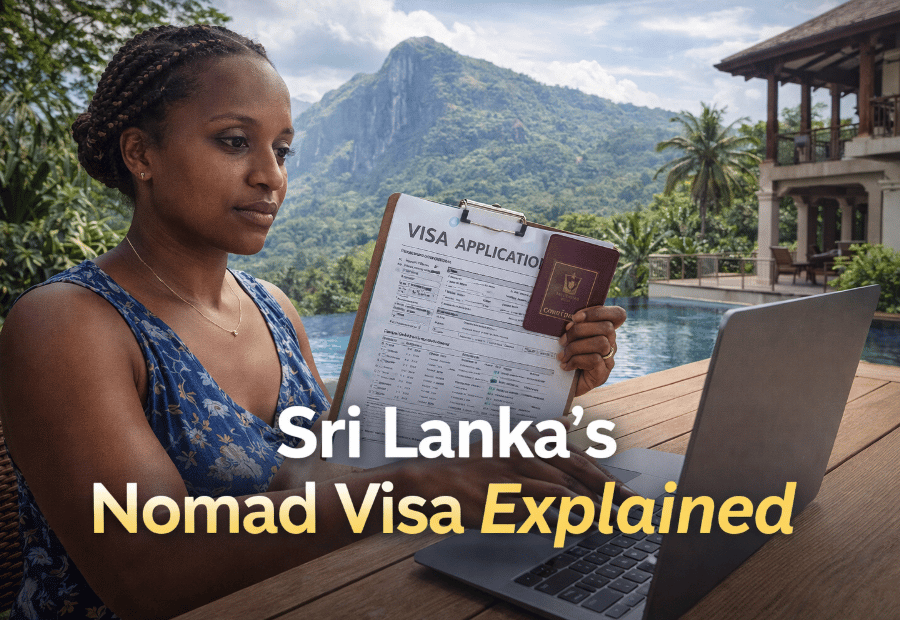
Sri Lanka’s Nomad Visa: Application, Paperwork, and What the Diaspora Should Actually Know
As digital ID systems reshape how travel, banking, and borders operate, countries are responding in different ways. One of the clearest responses has been the rise of nomad visas—temporary residency pathways designed to attract foreign income without long-term integration.
You're consistently looking online to see which regions of the earth won't be as deeply impacted by AI super surveillance systems while still giving you a level of agency and freedom.
Before we get into why Sri Lanka can be a top contender in 2026 and beyond you should understand that economies that don't have widespread internet, and do not have as much technical innovation as America, Dubai or the United Kingdom are going to be your end of times top contenders for freedom.
These territories like the ones we cover in the State of the Diaspora with clients, are usually agriculture focused and almost make you feel as if you're living in 1981.
At first, this can be a point of complaint but if you're an entrepreneur or retiree looking to still acquire a level of freedom this gives you the perfect recipe for long-term success without being totally integrated into a new system.
Sri Lanka’s newly opened nomad visa is part of that global shift. But beyond the headline, there are important realities around paperwork, infrastructure, and diaspora fit that deserve careful attention.
This visa is not random. It is strategic.
What Sri Lanka’s Nomad Visa Is (and Is Not)
At its core, Sri Lanka’s nomad visa is designed for foreign remote earners—individuals who earn income from outside the country and can support themselves without entering the local labor market.
What it offers:
Temporary legal stay
Permission to reside while working remotely
A relatively low barrier compared to permanent residency
What it does not offer:
Citizenship
Long-term residency guarantees
Automatic banking integration
Deep social or economic protection
This distinction matters. Nomad visas are access tools, not settlement plans which give you enough time and differentiation to choose your next steps with wisdom.
Visa Application & Paperwork: What to Expect
The application process is straightforward on paper, but still documentation-heavy, as most modern mobility pathways are.
Applicants should expect to prepare:
A valid passport with sufficient remaining validity
Proof of remote income (contracts, employer letters, or business documentation)
Bank statements showing consistent earnings
Proof of accommodation or address
Health insurance coverage
Basic background or character documentation
Like many emerging nomad visas, enforcement can vary. Requirements may be applied strictly in some cases and loosely in others, depending on volume, timing, and administrative capacity.
This means preparation matters more than persuasion. Clear, organized paperwork moves faster than explanations.
Why Sri Lanka Opened This Visa Now
Sri Lanka’s timing is not accidental.
The country is navigating:
Currency pressure
Tourism recovery
Debt restructuring
A need for stable foreign inflows
Nomad visa holders represent low-impact economic participants. They spend locally, bring foreign currency, and do not compete directly for jobs or social services.
From a policy perspective, this is efficient.
From a diaspora perspective, it signals something important: temporary mobility is being prioritized over permanent integration in many parts of the world right now and this is to your benefits in a multi-polar world where alliances are being formed.
State of the Diaspora: Who This Works For
For members of the global diaspora—especially those thinking strategically about 2026 and beyond—Sri Lanka’s nomad visa can serve as a testing ground, not a final destination.
It may work well for:
Solo professionals or couples
Families who love to travel together
Flexible earners with location independence
People exploring Asia without long-term commitments
Early movers who value optionality
It may be challenging for:
Families with school-aged children
Those needing stable, high-speed internet daily
People seeking strong legal or financial integration
Individuals who require robust healthcare infrastructure
Diaspora decisions are rarely just about visas. They involve community, continuity, and systems alignment.
Internet Infrastructure: A Critical Reality Check
One of the most important considerations in Sri Lanka is internet reliability.
While urban centers and select neighborhoods offer decent connectivity, the country does not yet have uniformly robust digital infrastructure. Power outages, inconsistent speeds, and service disruptions still occur.
For remote workers, this means:
Redundancy is essential (multiple SIMs, backups)
Expectations must be realistic
Certain types of work may be difficult without adaptation
This is not a flaw unique to Sri Lanka—it is common across many emerging markets—but it does shape daily life.
Nomad visas assume flexibility. Sri Lanka requires it.
What This Visa Signals in the Bigger Picture
Sri Lanka’s nomad visa is best understood as part of a broader global pattern:
Countries want foreign income, not long-term obligation
Temporary residency is easier to manage than permanent migration
Mobility is being structured in layers, not promises
For the diaspora, this means the era of “move once and settle forever” is giving way to phased presence.
Nomad visas are one phase. They buy time, experience, and insight—but not permanence.
The Strategic Takeaway
Sri Lanka’s nomad visa is neither a trap nor a golden ticket. It is a signal.
It tells us:
Mobility is still possible
Access now favors flexibility over permanence
Early, prepared movers have more options than reactive ones
For those navigating the post–digital ID landscape, the question is no longer where can I go—but how lightly can I move while systems continue to tighten.
Sri Lanka offers one answer. Not the only one—but a revealing one.
Guidance
🛡️ Build a Life Abroad with Clarity, Not Chaos.
Smart relocatin for families and retirees who want strategy — not sales pitches.
Disclaimer: We are not financial or legal advisors. All content is for educational and entertainment purposes only. Our role is to coach, guide, and equip you to make informed, sovereign decisions. Seek legal counsel for individual advice pertaining to your situation.
Support
journeywithus4u@gmail.com
© 2026. All rights reserved.